
Theia 643
0.21
UTI
0.31
CN
0.11
Cdens
0.25
CC3
0.19
Clit
1.0
Cdup
Nm (P>50%)
31
Core radius and density
3.0 [pc], 0.6 [pc-2]
- CN 0.31 Poorly populated
- Cdens 0.11 Very loose
- CC3 0.25 Low quality
- Clit 0.19 Rarely studied
- Cdup 1.0 Unique
 MOCA
MOCA
Overview
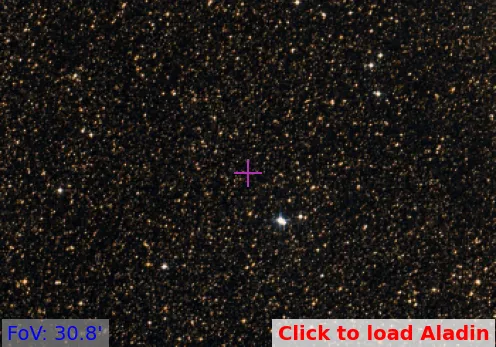
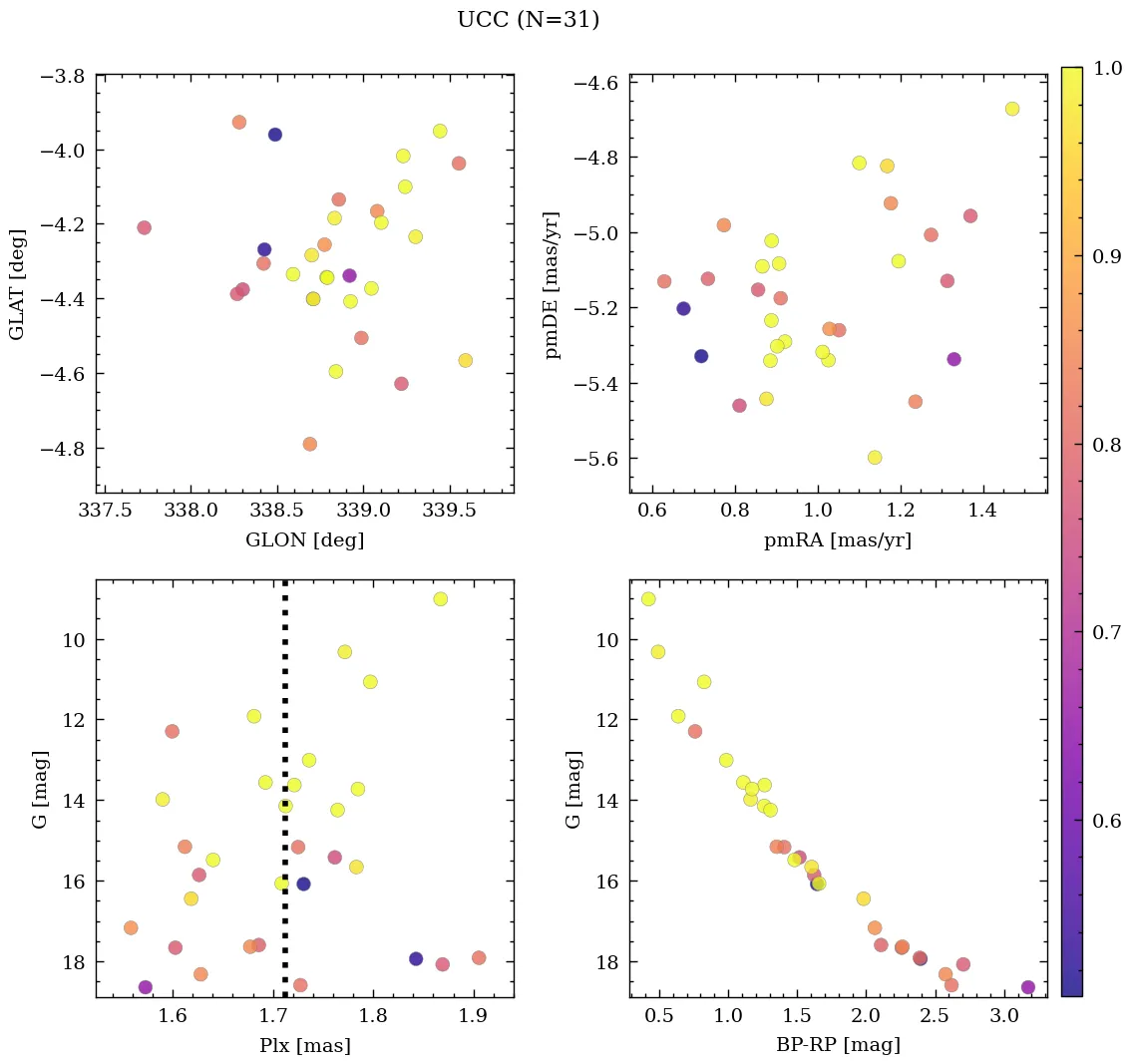
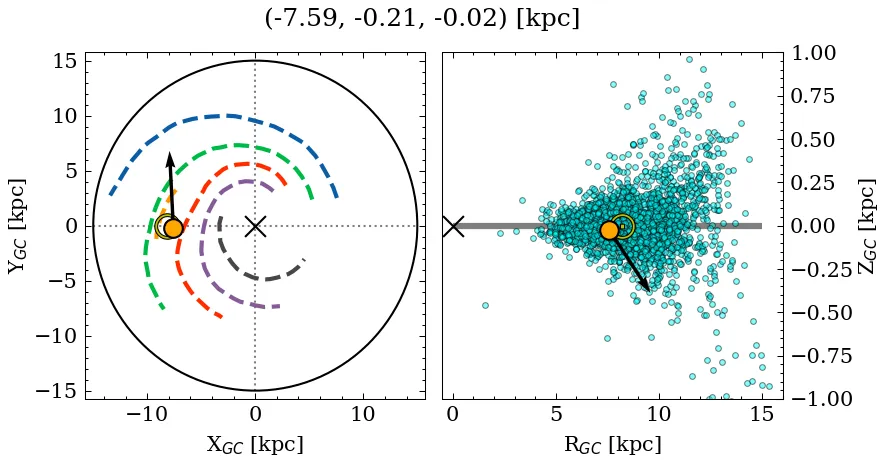
Theia 643 is a poorly populated, very loose object of low C3 quality. Its parallax locates it at a close distance, near the mid-plane, affected by low extinction. It is catalogued as a near-solar metallicity, intermediate-age cluster (see Parameters). It is rarely studied in the literature.
⚠️ Warning: the low UTI value and no obvious signs of duplication (Cdup=1.0) indicate that this is quite probably an asterism, moving group, or artifact, and not a real open cluster.
Data
| Reference | Year | RA [deg] | DEC [deg] | Plx [mas] | pmRA [mas/yr] | pmDE [mas/yr] | Rv [km/s] |
|---|---|---|---|---|---|---|---|
| UCC | 99999– | 255.591 | -48.877 | 1.713 | 0.921 | -5.176 | -22.628 |
| Yan et al. | 2026 | 255.562 | -48.924 | 1.709 | 1.182 | -5.03 | – |
| Hunt & Reffert | 2024 | 255.562 | -48.924 | 1.709 | 1.182 | -5.03 | -25.298 |
| Cavallo et al. | 2024 | 256.604 | -48.036 | 1.717 | – | – | – |
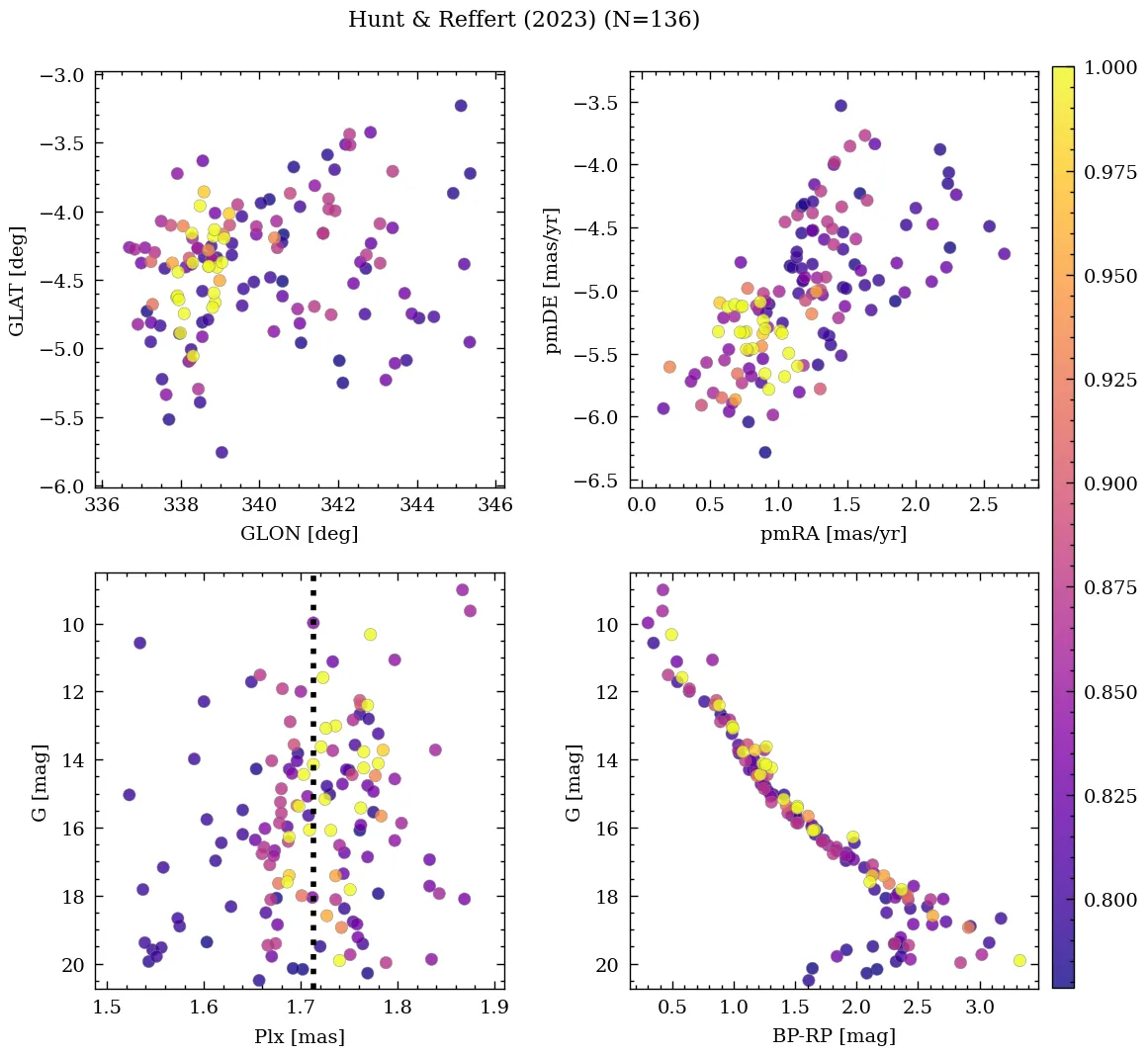
| Hunt & Reffert | 2023 | 255.562 | -48.924 | 1.709 | 1.182 | -5.03 | -25.298 |
| Kounkel & Covey | 2019 | 255.77 | -48.595 | 1.676 | – | – | -33.807 |
💡 Note: The UCC values are estimated from its identified members.
| Reference | Year | Dist [kpc] | Av [mag] | DAv [mag] | Age [Myr] | [Fe/H] [dex] | Mass [Msun] | Bfrac | BSS |
|---|---|---|---|---|---|---|---|---|---|
| UCC | 99999– | 0.565 | 0.84 | 0.81 | 159 | 0.050 | 64 | – | – |
| Yan et al. | 2026 | – | – | – | 158 | – | – | – | – |
| Hunt & Reffert | 2024 | 0.55 | 0.84 | 0.81 | 159 | – | 64(1) | – | – |
| Cavallo et al. | 2024 | 0.58 | 1.18 | – | 178 | 0.050 | – | – | – |
| Hunt & Reffert | 2023 | 0.55 | 0.84 | 0.81 | 159 | – | – | – | – |
| Kounkel & Covey | 2019 | 0.60 | 0.51 | – | 280 | – | – | – | – |
(N): Indicates that there are N extra values assigned to this parameter in the corresponding reference.
Yan et al. (2026)
Number of WDs: expected from single-star evolution N=4, with probability of formation through binary evolution >=0.5 N=4.
Cavallo et al. (2024)
Gold sample.
Hunt & Reffert (2024)
Classified as open cluster. CMD class: 1.00 (50th percentile).
Hunt & Reffert (2023)
Classified as open cluster. CMD class: 1.00 (50th percentile).