
Theia 19
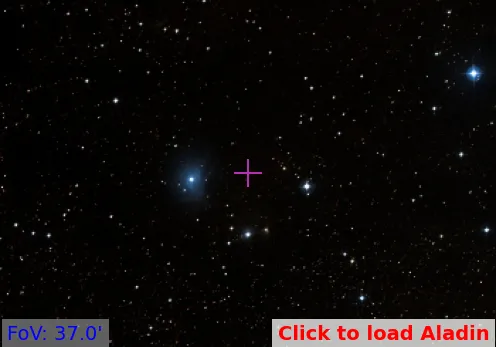
0.19
UTI
0.0
CN
1.0
Cdens
0.75
CC3
0.3
Clit
0.4
Cdup
Stellar density (N50/rad)
25.0 [N/pc2]
- CN 0.0 Sparse
- Cdens 1.0 Very dense
- CC3 0.75 High quality
- Clit 0.3 Poorly studied
- Cdup 0.4 Possibly duplicate
 MOCA
MOCA
Overview
Theia 19 is a sparse, very dense object of high C3 quality. Its parallax locates it at a close distance, above the mid-plane, affected by moderate extinction. It is catalogued as a near-solar metallicity, very young cluster, but with a large variance across recent sources for the absorption parameter (see Parameters). It is poorly studied in the literature.
⚠️ Warning: This is possibly a duplicate object, which shares a significant percentage of members with at least one previously reported entry. See table with shared members information.
Data
| Reference | Year | RA [deg] | DEC [deg] | Plx [mas] | pmRA [mas/yr] | pmDE [mas/yr] | Rv [km/s] |
|---|---|---|---|---|---|---|---|
| UCC | 99999– | 3.213 | 65.576 | 1.395 | 2.397 | -2.431 | -12.653 |
| Hunt & Reffert | 2024 | 3.221 | 65.566 | 1.387 | 2.423 | -2.396 | -12.631 |
| Cavallo et al. | 2024 | 3.389 | 65.673 | 1.381 | – | – | – |
| Hunt & Reffert | 2023 | 3.221 | 65.566 | 1.387 | 2.423 | -2.396 | -12.631 |
| He et al. | 2022 | 3.116 | 65.692 | 1.398 | 2.466 | -2.387 | – |
💡 Note: The UCC values are estimated from its identified members.
| Reference | Year | Dist [kpc] | Av [mag] | DAv [mag] | Age [Myr] | [Fe/H] [dex] | Mass [Msun] | Bfrac | BSS |
|---|---|---|---|---|---|---|---|---|---|
| UCC | 99999– | 0.99 | 2.01 | 1.55 | 2 | 0.290 | 98 | – | – |
| Liu et al. | 2025 | 1.10 | 0.37 | – | 2 | – | – | – | – |
| Hunt & Reffert | 2024 | – | – | – | – | – | 98(1) | – | – |
| Cavallo et al. | 2024 | 0.99 | 2.12 | – | 2 | 0.290 | – | – | – |
| Hunt & Reffert | 2023 | 0.69 | 3.01 | 1.55 | 4 | – | – | – | – |
| He et al. | 2022 | – | 1.90 | – | 2 | – | – | – | – |
(N): Indicates that there are N extra values assigned to this parameter in the corresponding reference.
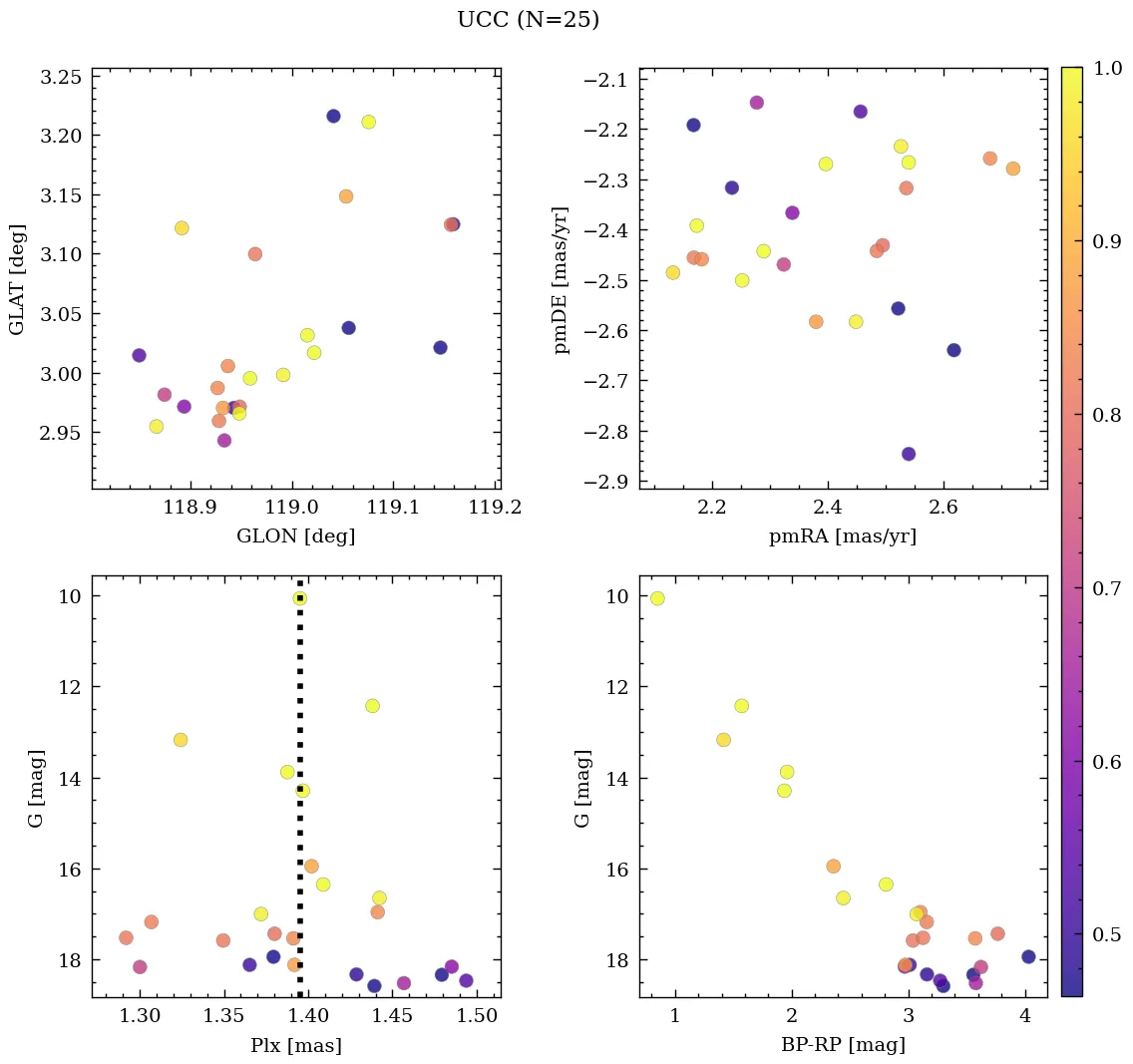
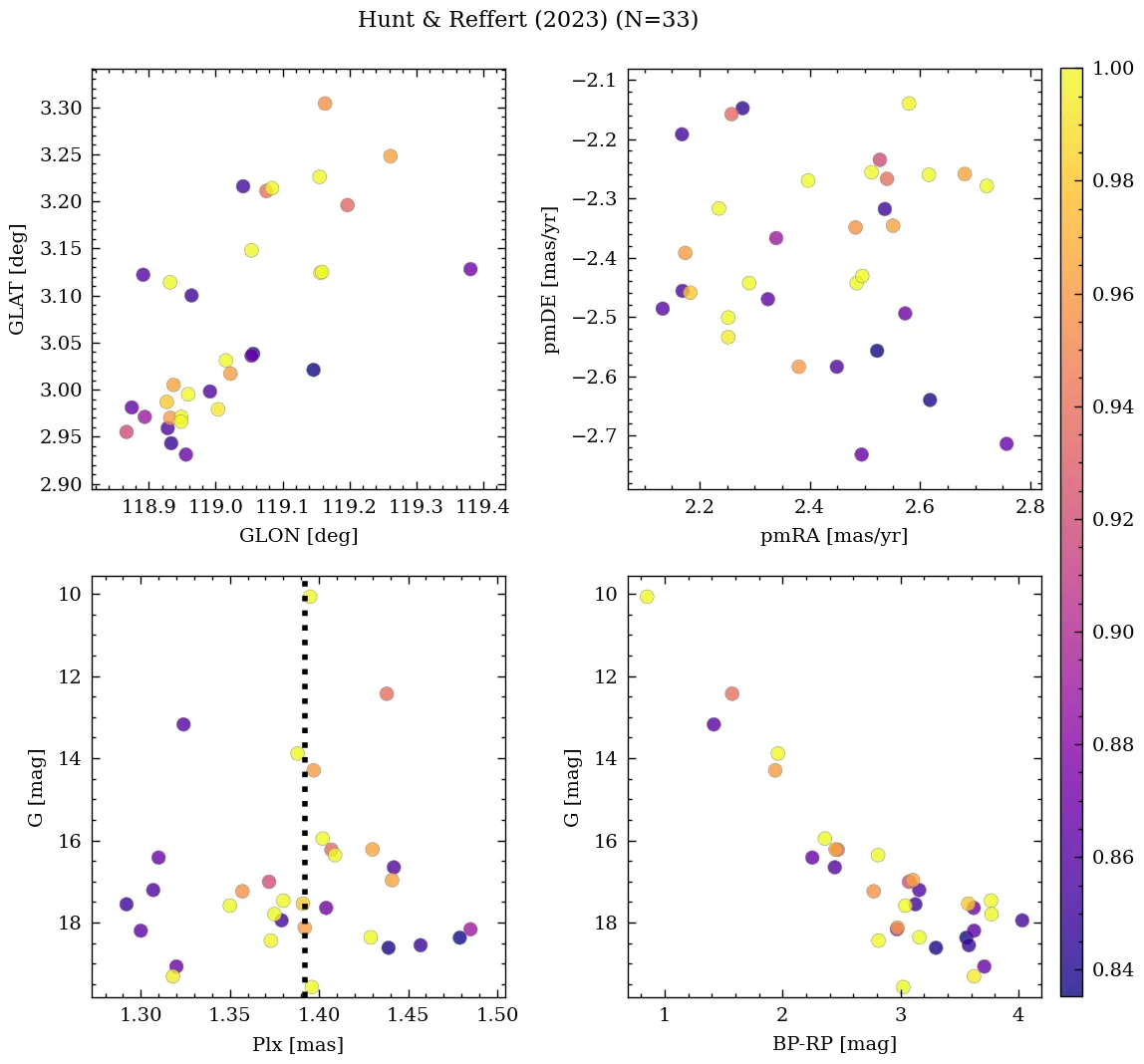
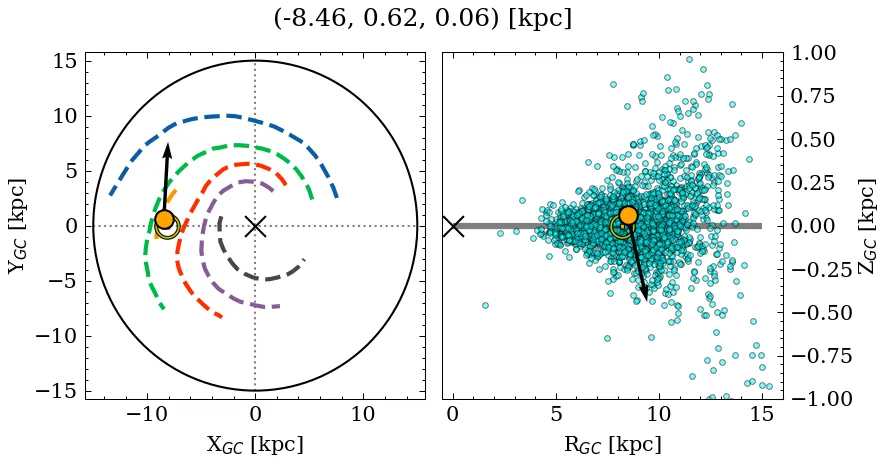
Liu et al. (2025)
Classified as primordial binary cluster 304 along with OC_0227.
Palma et al. (2025)
Classified as genetic pair P240, along with OC_0227.
Cavallo et al. (2024)
Bronze sample.