
FSR 1430
(SAI 96; MWSC 1589)
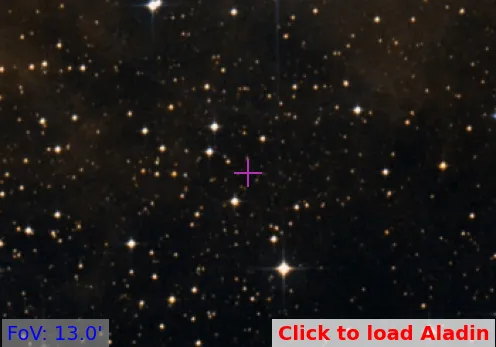
0.62
UTI
0.76
CN
0.56
Cdens
0.75
CC3
0.52
Clit
1.0
Cdup
Nm (P>50%)
132
Core radius and density
1.6 [pc], 2.8 [pc-2]
- CN 0.76 Rich
- Cdens 0.56 Moderately dense
- CC3 0.75 High quality
- Clit 0.52 Moderately studied
- Cdup 1.0 Unique
 MOCA
MOCA
Overview
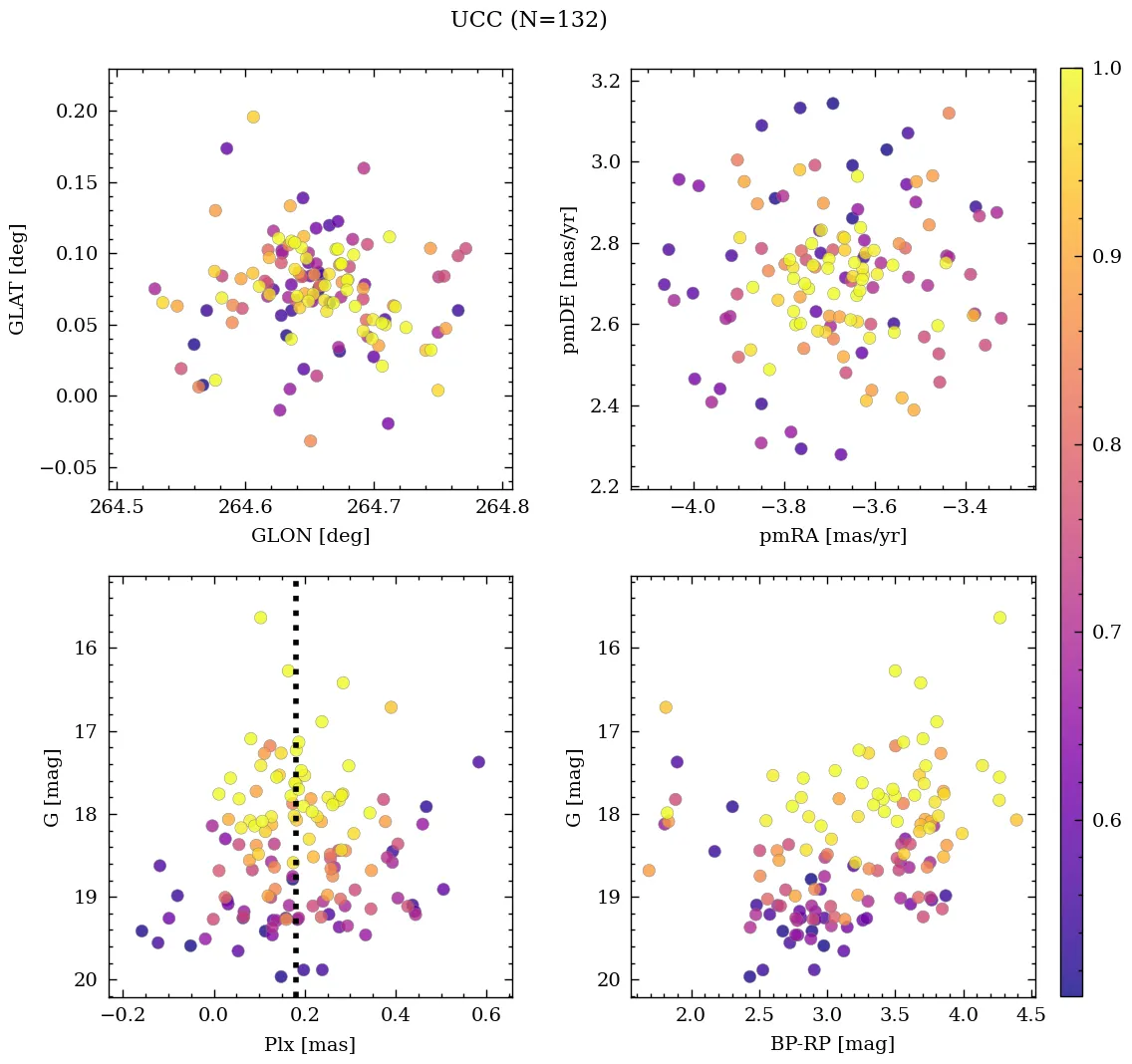
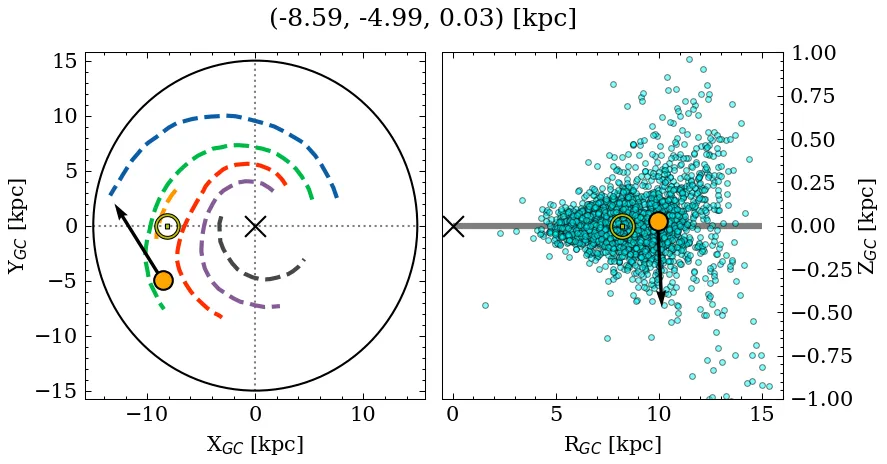
FSR 1430 is a rich, moderately dense object of high C3 quality. Its parallax locates it at a large distance, near the mid-plane, affected by very high extinction. It is catalogued as a massive, near-solar metallicity, intermediate-age cluster, but with a large variance across recent sources for the age parameter (see Parameters). It is moderately studied in the literature.
Data
| Reference | Year | RA [deg] | DEC [deg] | Plx [mas] | pmRA [mas/yr] | pmDE [mas/yr] | Rv [km/s] |
|---|---|---|---|---|---|---|---|
| UCC | 99999– | 132.966 | -44.271 | 0.18 | -3.676 | 2.722 | 96.622 |
| Hunt & Reffert | 2024 | 132.976 | -44.277 | 0.179 | -3.691 | 2.733 | 96.665 |
| Cavallo et al. | 2024 | 132.957 | -44.278 | 0.192 | – | – | – |
| He et al. | 2023 | 132.971 | -44.273 | 0.181 | -3.7 | 2.731 | 96.62 |
| Hunt & Reffert | 2023 | 132.976 | -44.277 | 0.179 | -3.691 | 2.733 | 96.665 |
| Just et al. | 2023 | 132.962 | -44.25 | – | – | – | – |
| Dias et al. | 2016 | 132.954 | -44.263 | – | 0.26 | 2.8 | – |
| Kharchenko et al. | 2016 | 132.962 | -44.25 | – | – | – | – |
| Dias et al. | 2014 | 132.954 | -44.263 | – | 0.26 | 2.8 | – |
| Kharchenko et al. | 2013 | 132.967 | -44.253 | – | -11.48 | 6.06 | – |
| Glushkova et al. | 2010 | 132.956 | -44.263 | – | – | – | – |
| Froebrich et al. | 2007 | 132.967 | -44.266 | – | – | – | – |
💡 Note: The UCC values are estimated from its identified members.
| Reference | Year | Dist [kpc] | Av [mag] | DAv [mag] | Age [Myr] | [Fe/H] [dex] | Mass [Msun] | Bfrac | BSS |
|---|---|---|---|---|---|---|---|---|---|
| UCC | 99999– | 5.155 | 7.195 | 2.25 | 708 | -0.240 | 3722 | – | – |
| Hunt & Reffert | 2024 | 4.56 | 6.04 | 2.25 | 1007 | – | 3304(1) | – | – |
| Cavallo et al. | 2024 | 9.46 | 4.87 | – | 1380 | -0.240 | – | – | – |
| He et al. | 2023 | 5.75 | 6.50 | – | 631 | – | – | – | – |
| Hunt & Reffert | 2023 | 4.56 | 6.04 | 2.25 | 1007 | – | – | – | – |
| Just et al. | 2023 | – | – | – | 316 | – | 4140 | – | – |
| Dias et al. | 2016 | 2.84 | 7.89 | – | 708 | – | – | – | – |
| Kharchenko et al. | 2016 | 6.74 | 8.41 | – | 316 | – | – | – | – |
| Kharchenko et al. | 2013 | 6.74 | 8.41 | – | 316 | – | – | – | – |
| Glushkova et al. | 2010 | 2.84 | 7.89 | – | 708 | – | – | – | – |
(N): Indicates that there are N extra values assigned to this parameter in the corresponding reference.
Cavallo et al. (2024)
Bronze sample.
Hunt & Reffert (2024)
Classified as open cluster. CMD class: 0.35 (50th percentile).
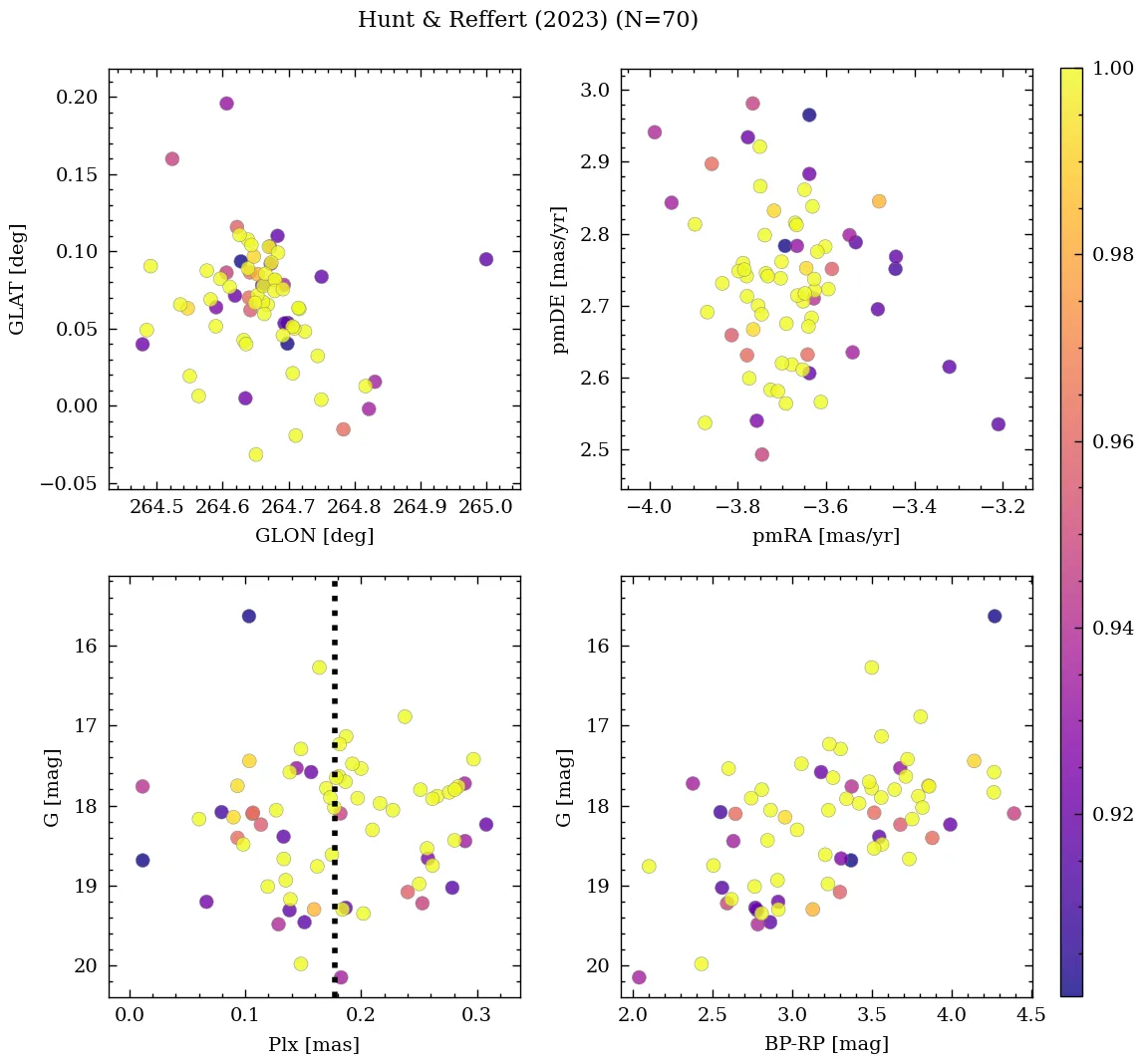
Hunt & Reffert (2023)
Classified as open cluster. CMD class: 0.35 (50th percentile).